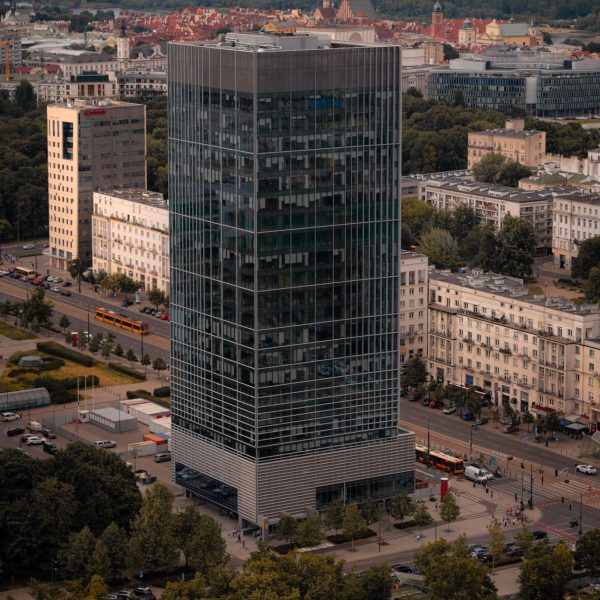
Poland now ranks among the fastest growing manufacturing and logistics hubs in Central Europe. Companies that once treated the Polish market as an afterthought are discovering that contracts and product documentation and even internal HR policies all need to cross the language barrier cleanly. A rushed or literal translation does not just read awkwardly. It can void a warranty clause or misstate a safety instruction on a factory floor. Demand for accurate business translation between English and Polish has climbed sharply over the past few years and most companies were not ready for it.
What Makes Polish Especially Tricky
Polish grammar carries seven noun cases and a verb aspect system that has no direct English equivalent. A translator who only speaks conversational Polish can produce text that native readers immediately flag as foreign even when every word is technically correct. Business Polish also leans more formal than everyday speech which trips up translators who learned the language casually. Legal and technical documents raise the stakes further since a single misplaced case ending can shift the entire meaning of a contractual clause.
Volume compounds the difficulty for growing companies. A firm expanding into Warsaw or Krakow rarely needs one document translated. It needs employee handbooks and supplier agreements and marketing copy and product manuals all rendered consistently at once. Agencies offering established polish translation services assign a dedicated team rather than farming work out to whichever freelancer is available that week. That continuity matters enormously once a company has dozens of documents circulating with the same terminology.
Consistency Across A Growing Document Library
Terminology drift is the silent killer of multilingual business operations. A term translated one way in a contract and a different way in the matching invoice creates confusion that customers and auditors both notice quickly. Companies scaling their Polish operations increasingly rely on a proper computer assisted translation tool that stores every approved term in a shared glossary so nothing gets reinvented project after project. The tool does not replace the translator. It just makes sure yesterday's approved phrasing survives into tomorrow's document without anyone having to remember it manually.
Smaller companies sometimes assume this kind of infrastructure is only worth building once a business reaches a certain size. In practice the opposite is often true. A small team without a shared glossary drifts into inconsistency faster than a large one because there is no dedicated reviewer catching the mismatches early. Building the habit while the document volume is still manageable saves a painful cleanup project later once the backlog grows into the hundreds of pages.
Testing And Certification Add Another Layer
Language proficiency testing sits alongside translation as a related but separate need for companies hiring Polish speaking staff abroad. According to the Common European Framework reference used across the continent employers can specify a required proficiency level rather than relying on a vague self assessment during an interview. That framework gives HR teams a shared vocabulary for comparing candidates who studied Polish through completely different programs and institutions.
Certification requirements vary sharply depending on the industry and the receiving institution. A university admissions office might accept a translation with a simple accuracy statement while a court or immigration office demands something closer to a certified translation that meets that agency's own formal standard. Companies that skip this research step often submit paperwork that gets bounced back weeks later purely on a technicality that had nothing to do with the actual translation quality.
The Talent Pipeline Is Shifting Too
Poland's own language services sector has grown alongside the demand from foreign companies entering the market. Local agencies increasingly compete for the same international contracts that used to go automatically to firms based in London or Berlin. This shift benefits buyers because more competition tends to push quality and pricing in a healthier direction for everyone involved in the transaction. It also means client companies now have a genuine choice between a Polish based provider and an international one rather than defaulting to whichever name comes up first in a search.
Rising demand for Polish translation in business is a straightforward reflection of who is doing the work across much of Europe, particularly in construction and the skilled trades. That workforce brings its own standards and habits, and specification documents increasingly have to travel between languages on site. It shows up in something as ordinary as gutter installation, where fall, bracket spacing and outlet position are specified once and then read by whoever is actually on the ladder.
Rising demand has pulled a great many new suppliers into this category over the last few years. That makes choosing among polish translation services harder rather than easier, because volume and quality have not grown at the same rate. Established specialisation remains the most reliable signal available.
Freelance marketplaces have added noise to this shift that buyers need to filter carefully. A profile claiming native fluency and years of business experience is easy to fake and hard to verify from outside the country. Checking for professional association membership or asking for verifiable business references remains one of the more reliable filters available before committing to a long term partner for ongoing translation work.
Where This Trend Goes Next
Manufacturing relocation into Poland shows no sign of slowing based on current investment trends across the automotive and electronics sectors. Every new facility brings a fresh wave of documentation that needs translating accurately from day one rather than patched together after problems surface. Companies that build a solid translation and terminology process early tend to scale far more smoothly than those trying to retrofit consistency onto years of inconsistent documents after the fact.
The businesses getting this right treat translation as part of their operational infrastructure rather than a vendor relationship handled reactively when something urgent comes up. That mindset shift alone tends to separate companies that expand successfully into the Polish market from those that stumble over avoidable language mistakes in their first year.
Recruiting is another area where the language question shows up earlier than most companies expect. A hiring manager screening candidates for a new Warsaw office often needs translated resumes and reference letters processed within days rather than weeks. Building a relationship with a translation partner before that hiring push begins saves a scramble later when a strong candidate is waiting on paperwork that nobody planned for in advance. Companies that treat this as a one time favor rather than an ongoing partnership tend to pay rush fees far more often than those with an established provider on call.
Internal training materials deserve the same attention that external facing documents usually receive by default. A safety manual translated poorly for a Polish speaking factory floor is not just a compliance risk on paper. It is a real hazard for the people reading it every shift. Companies sometimes prioritize customer facing content and treat internal materials as lower stakes which is precisely backwards given how directly those documents affect daily operations and worker safety on site.
The long term winners in this space tend to be the companies willing to invest in translation infrastructure before it becomes an emergency rather than after. Waiting until a deal falls through or a regulator flags a mistranslated clause is an expensive way to learn a lesson that a modest upfront investment could have avoided entirely. Poland's growth story is not slowing down and neither is the language work that comes attached to it for every company serious about competing there.