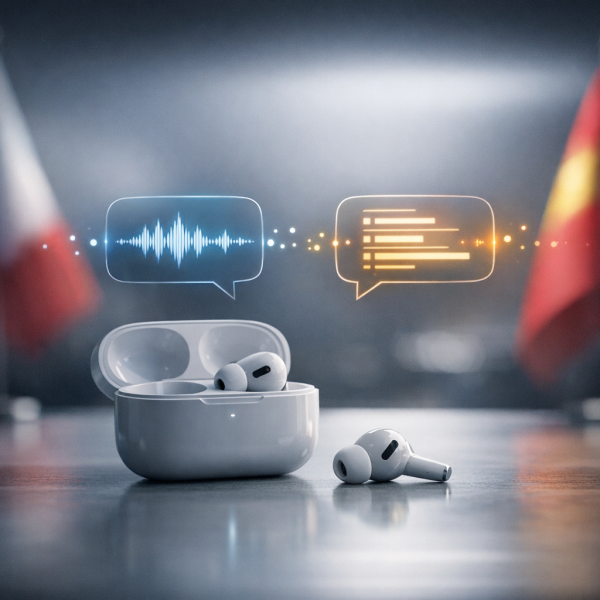
Real-time language translation is no longer science fiction. Tiny earbuds now promise to turn foreign conversations into clear, understandable speech in seconds, making global travel, international business, and cross-border friendships feel easier than ever. But how close are these devices to delivering on the dream of seamless communication, and where do their limits begin?
1. How Translation Earbuds Actually Work
Translation earbuds combine three key technologies: speech recognition, machine translation, and text-to-speech. First, the microphone in the earbud captures speech and converts it into text. Then, a translation engine processes this text and generates an equivalent in the target language. Finally, the earbuds play back the translated speech to the listener, usually within a few seconds.
Most devices rely heavily on cloud-based services to handle the heavy lifting, which means a stable internet connection is essential for the best results. Some earbuds offer limited offline capabilities, but these are typically constrained in terms of available language pairs and translation quality.
For everyday travelers and casual conversations, they can be surprisingly effective, especially when combined with professional support from a reliable Turkish translation company when accuracy truly matters. The earbuds help you get through quick chats, while experts ensure flawless language in contracts, marketing campaigns, or technical documentation.
2. When Translation Earbuds Work Well
Translation earbuds shine in simple, practical situations. Think of ordering food at a restaurant, asking for directions, checking into a hotel, or making casual small talk. Short, direct sentences and common vocabulary are usually handled fairly accurately, especially for well-supported languages like English, Spanish, Mandarin, or Turkish.
They are also helpful in low-stakes social settings, such as meeting new people while traveling, collaborating with international classmates, or participating in basic tourist activities. In these contexts, the occasional mistranslation is more of a minor inconvenience than a serious problem.
3. Where Earbuds Start to Struggle
Despite fast progress, translation earbuds still have clear weaknesses. They struggle with heavy accents, fast speech, background noise, and overlapping voices. If someone speaks very quickly, uses strong regional slang, or mumbles, the device might misinterpret entire phrases before they even reach the translation step.
Context is another challenge. Words that have multiple meanings can easily confuse the system, especially if the surrounding sentence is short or ambiguous. Idioms, humor, cultural references, and sarcasm are frequently mistranslated or flattened into plain, literal language that misses the intended tone.
4. Business and Legal Conversations: A Risky Use Case
In business meetings, negotiations, legal discussions, or medical consultations, even small mistakes can have serious consequences. A mistranslated contract clause, technical specification, or medical instruction may lead to misunderstandings, financial losses, or even safety issues.
Translation earbuds are not designed to replace professional interpreters or certified translators in high-stakes situations. They lack an understanding of industry-specific terminology, regulatory language, and the nuance of diplomatic or corporate communication. For these contexts, human experts remain essential.
5. The Human Touch: Why Professional Translators Still Matter
Human translators bring cultural knowledge, subject-matter expertise, and judgment that no earbud can replicate. They can adapt tone, style, and vocabulary to fit a specific audience, whether it is a marketing campaign, a technical manual, a legal agreement, or a government report.
A professional translator does more than convert words. They localize content, ensuring that jokes, metaphors, product names, and examples make sense in the target culture. They also maintain consistent terminology across projects, something that ad-hoc machine output often fails to do.
6. Privacy, Security, and Data Concerns
Many translation earbuds send audio to remote servers for processing, which raises privacy questions. Sensitive business discussions, personal medical information, or confidential negotiations may be exposed to third-party systems if the device’s security measures are not robust.
Users should review privacy policies, data retention practices, and encryption standards before relying on earbuds for confidential conversations. In many regulated industries, using consumer-grade translation gadgets for official communication may be inappropriate or noncompliant with local laws.
7. Travel Convenience vs. Long-Term Language Learning
For travelers, translation earbuds provide immediate convenience: instant help at the airport, train station, or restaurant. However, they can also become a crutch. Relying entirely on gadgets may reduce motivation to learn even basic phrases, which are still incredibly valuable for building trust and rapport.
A balanced approach works best. Use earbuds to bridge gaps when needed, but also learn greetings, numbers, and common expressions. Human interaction, even with limited vocabulary, often creates a more genuine connection than conversations filtered entirely through technology.
8. How to Get the Most Out of Translation Earbuds
To maximize effectiveness, speak clearly, use short sentences, and avoid slang or overly complex phrasing. Stay in relatively quiet environments when possible, and position the microphone close to the speaker’s mouth. Encourage the other person to speak slowly and pause between phrases.
It is also wise to repeat critical information, such as addresses, dates, and numbers, and to confirm understanding by paraphrasing. Treat the earbuds as a helpful guide, not an infallible authority, especially in formal or technical interactions.
Helpful Tool, Not a Total Solution
Translation earbuds represent an impressive step forward in breaking down language barriers. In casual, everyday settings, they do work well enough to help travelers, students, and international colleagues communicate more easily. Their convenience and speed make them an attractive option for low-risk conversations.
At the same time, they are far from perfect. They still struggle with nuance, context, industry jargon, and high-stakes communication where precision is nonnegotiable. For situations that demand accuracy, legal clarity, or brand consistency, human translators and interpreters remain indispensable.
The smartest strategy is to view translation earbuds as part of a broader toolkit: excellent for quick interactions and spontaneous conversations, but complemented by professional language services when the message truly matters. As technology continues to improve, the partnership between smart devices and human expertise will define the future of global communication.